Now enrolling Next semester: teacher-guided projects with an EAD teacher. Seats in each group are limited. Students or parents can enrol. Reserve a seat →

For parents and students

Real projects your child will want to finish.

From play-based Early Years to three levels: Explorer, Investigator and Researcher. Every project works on paper or on screen, and the workbooks are free.

Programs by age

From playgroup to research in a niche.

Start where your learners are. Pre-school, Early Years and Primary continue exactly as before. From about age 7, learners also follow EAD’s three levels, with one way of working: measure, change one thing, measure again, explain.

Early Years · Ages 3–8

🧸 Learning through play

41 free video lessons: STEAM projects, English and maths games, science experiments, and social-emotional skills. Runs in a classroom or at home — no equipment needed.

Explore Early Years →
Primary · Grades 3–5

🧭 Guided real-world projects

Fully scripted project missions that teach planning, teamwork, and data analysis — until students can explain it back as the teacher.

Explore Primary →
Middle · Grades 6–9

🚀 The full STEM AI Lab

Twelve project labs across two routes, all 240 steps written out, with AI guidance, marking out of 20 and portfolios.

Explore the Labs →

EAD student levels · Young Innovators and Impact Innovators

Explorer · from about 7

🔎 Discover and experiment

Short, safe tests at home or school with an adult nearby: notice a problem, measure it, make one improvement and explain what happened. Ten projects in EAD Young Innovators.

Explorer level →
Investigator · from about 11

🔬 Investigate and analyse

Real industry problems with reliable sources, a measured baseline, costs, one controlled change and repeated measurement. The twelve EAD Labs are Investigator projects.

Investigator level →
Researcher · from about 14

📈 Build authority in one niche

Advanced research, AI agents and automation with human checks, business cases and relationships that last — many measured projects in one niche. EAD Impact Innovators.

Researcher level →

Ages are a guide only. Evidence and demonstrated capability decide progression. Compare every programme →

The EAD path

Three levels. One direction: authority in a niche.

This is not a coding class or a STEM kit. At every level a learner works on real problems with the same method, and every level ends in a formal assessment — so progress is earned, not attended.

The EAD path, step by step Pre-school and Early Years for ages 3 to 8, then Explorer from about 7, Investigator from about 11 and Researcher from about 14. A level assessment sits between each level. The path leads to authority in a niche. Level assessment Portfolio of 3+ projects, a defence, each project marked out of 20 Pre-school Ages 3–8 · play first Explorer from about 7 Measure before you change anything Investigator from about 11 Cost a real problem, test it, defend it Researcher from about 14 A body of work and a network in one niche Authority in a niche People in that industry ask for your view Recognised by others, built one measured project at a time
Level 1 · from about 7

Explorer

Does
Short, safe tests at home or school: notice a problem, measure it, make one improvement.
Assessed on
A clear question, a safe test, simple evidence, and explaining what happened.
Achieves
An Explorer certificate, and the habit of measuring before changing anything.
Level 2 · from about 11

Investigator

Does
Real industry problems: reliable sources, a measured baseline, costs and one controlled change.
Assessed on
Credible evidence, data and costs, a tested recommendation, and ten people in a relations ledger across the portfolio.
Achieves
An Investigator certificate, and the ability to cost a problem, run a fair test and defend the result.
Level 3 · from about 14

Researcher

Does
Many projects in one niche: advanced research, AI agents and automation with human checks, lasting relationships.
Assessed on
A complex niche problem, advanced data, responsible AI use, a business case and a defended, measurable solution.
Achieves
A Researcher certificate, a body of work in one niche, and a network that knows it.
Beyond the levels

Authority in a niche

People in that industry start asking for the learner’s view. Authority is recognised by others, never claimed, and built one measured project at a time.

The ten-year vision →

The same assessment rules at every level: at least three finished projects (five recommended) · a portfolio review · a defence of selected projects · each project marked out of 20 · certified only when the criteria are met. Free project feedback and finishing a semester never award a certificate on their own. How assessment works →

Built for work that AI is changing

AI is changing which tasks people are paid for. What keeps its value is what EAD practises at every level:

  • Finding the problem worth solving, not only answering the question set
  • Proving a change worked, with numbers someone else can check
  • Using AI agents as tools for research and automation, with a person checking every output
  • Trust and relationships inside one industry
Many AI or STEM coursesThe EAD path
Starts withA lesson or a kitA real problem in the learner’s own life
AI isThe subject being taughtA tool for research and automation, checked by a person
Ends withA finished exerciseA measured change someone else can check
Assessed byA quiz or attendanceA portfolio, a defence and real relationships
Leads toThe next courseThe next level, then authority in one niche

EAD Little Labs · Below Grade 5

Before the big labs, the fun ones.

Children under Grade 5 are not ready for a ten-step research project — and they should not be. Little Labs gives them short, regular projects that are genuinely fun to do and quietly build the mind the big labs will need later: noticing, asking, guessing, testing, explaining.

🍌

Where did my banana come from?

Draw the journey from a farm to your plate. Ask one grown-up to fill in a gap you cannot.

30 minNo screen
🌙

The Moon Diary

Draw the moon every night for four weeks. Then explain the pattern you found to someone older than you.

5 min a nightNo screen
🌉

The Paper Bridge

One sheet of paper, two books, and coins on top. How many before it falls? Now beat your own record.

40 minBuild it
💧

The Drip Detective

Put a cup under a dripping tap for one hour. Multiply. Tell your family what a whole week costs.

1 hrCounting
🧪

The Colour-Changing Kitchen

Purple cabbage water plus lemon, plus soap, plus salt. Predict first, then look. Were you right?

45 minGrown-up nearby
🐜

The Ant Highway

Follow one line of ants and map where it goes. Move one crumb and watch what the whole road does.

30 minOutside
🎨

Sort the World

Thirty objects from around the house. Sort them your own way — then make someone guess your rule.

25 minNo screen
🗣️

Teach It Back

Learn one small thing today. Tonight, teach it to someone younger — and answer their questions.

15 minTalking
💰

The Small Shop

You have a little money and three things to buy. Which is fairest, and how would you explain the choice?

20 minMaths
😊

The Mood Chart

Draw a face for every day for one week. At the end, find the day that was different — and say why.

2 min a dayFeelings
🔎

True or Not True?

Find one thing on a screen that is not real. Then find one clue that gave it away.

20 minWith a grown-up
🏠

House Rules

Write three rules everyone at home agrees to. Get them to sign. Check in a week if they held.

30 minTogether

Same loop as the big labs — just child-sized.

Every Little Lab runs the same five moves an EAD Labs project runs. That is the whole point: by Grade 5, the habit is already there and the only thing that changes is the size of the problem.

NoticeLook at something ordinary properly.
AskSay out loud what you don't know.
GuessCommit to an answer before checking.
TestDo the small thing that settles it.
ExplainTell one person, and take their question.

Early Years Program · Ages 3–8

Big skills start small.

41 free video lessons built for ages 3–8 — projects, games, and experiments that run in a classroom or at the kitchen table. Free on YouTube, no accounts, no equipment.

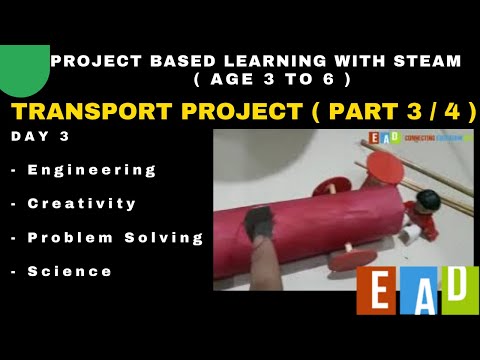
🎨 Project-Based Learning with STEAM 14 videos

Small hands-on projects that build brainstorming, planning, and presentation skills — one project at a time.

Watch the full playlist on YouTube →

🔤 English & Maths Games 18 videos

Playful games that turn letters and numbers into something children ask to do again.

Watch the full playlist on YouTube →

🧪 Science Experiments & Creative Challenges 7 videos

Safe, kitchen-table experiments that teach children to predict, test, and observe like young scientists.

Watch the full playlist on YouTube →

💛 Personal & Social Development 2 videos

Short lessons on feelings, sharing, and confidence — the skills that make school work.

Watch the full playlist on YouTube →

🍎 For teachers: the orientation class

How to conduct each session — grouping, pacing, and keeping 3-to-8-year-olds building instead of watching.

Watch on YouTube →

🏡 Parents on the program

Homeschooling and school parents on what changed for their children — in their own words.

Watch on YouTube →
Bring Early Years to Your School

Preschools, primary sections, and homeschooling families — teacher guidance and session plans included on consultation.

Primary Program · Grades 3–5

Students who can teach it back.

Grade 3–5 students run real projects — and finish by explaining project management, data analysis, and solution design as the teacher. Watch their real online sessions below. Every mission is fully scripted, because it has to work in real classrooms with real teaching loads.

📘

Booklets that carry the lesson

Step-by-step project booklets for Grades 3–5 — open the page and teach. No preparation marathon, no AI experience needed.

🎤

Students become the teacher

Missions end with students recording themselves explaining project management and data analysis — proof of understanding no test can show.

🤝

EAD teachers in your classroom

EAD teachers deliver the missions in class — designed around what we learned delivering this in real Lahore classrooms.

🎬 Data Analyst vs Business Analyst vs Project Manager 2 sessions

Online sessions taught by our Grade 3–5 students — children who learned project-based learning with real-world tools, explaining the roles to you.

Watch the sessions on YouTube →

🎬 Solution Designing — Full Course 6 sessions

A six-session course on spotting problems and designing solutions — delivered by students, start to finish.

Watch the course on YouTube →
Request the Grade 3–5 Booklets

Shared on consultation with teacher guides — so we can walk your team through delivery first. Students who move fast continue straight into the Grade 5+ printable booklets and the EAD platform.

Already running, already published

Watch our students teach it back.

Not a prospectus. These are real sessions taught by Grade 3–5 students who learned project-based work with real tools, and free lesson libraries anyone can use tonight without asking us for anything.

41free video lessons, ages 3–8
240steps, written out in full
12free projects, one per industry
0cost to start, for anyone

Built by Haroon Khalid — Director of Products at Dimitra.io, an AI AgriTech platform running products in 10+ countries, and delivered in real Lahore classrooms. No longitudinal outcome data yet — the ten-year claim becomes checkable in 2036, and we say so rather than let you find out later.

EAD Labs · Investigator level

Twelve worlds. One free project in each.

Every industry that still matters in 2036 has a lab. Each one opens with a complete starter project — the question, the ten steps, the people to interview, the defence questions, the marking rubric — free for any student, any teacher, anywhere. No account, no payment, no expiry.

⬡ Free forever · Open the page and start

How a student actually uses this

Not a course to enrol in. A shelf of real problems to pick from — three or four a year, alongside whatever school already asks of them.

1Pick a world you are curious aboutTwelve to choose from. Curiosity is a good enough reason — this is the discovery phase.
2Run the free starter projectTen steps, each written out in full — what to do, what to write down, how to know it is finished, and the mistake most people make. No teacher required.
3Do three or four a year, in different worldsBy Grade 8 a student has honestly tried most of the twelve — and knows which one they return to.
4Then go deep in the one that stuckThat is the Researcher level, in EAD Impact Innovators: depth in a single niche, human certification, a mentor and a network.

Schools: ask your students for three to four projects in the coming year. Curriculum mapping to SNC/PCTB, Cambridge and KHDA is inside the page, along with the assessment template.

12labs open today, more as the world adds industries
2routes through every project — no-tech or high-tech
0rupees to start, in any lab, for anyone
Route A · No-tech Paper, a pen, and people

Interviews, measurements, maps, models. Runs in a village classroom with no electricity as well as it runs anywhere else.

Route B · High-tech Open-source tools, zero licences

Colab, satellite imagery, open air-quality data, circuit simulators, AI notebooks. Free tools professionals actually use.

Free → paid Where money enters — and where it doesn’t

All twelve starter projects, the AI feedback and a shareable portfolio stay free, permanently. Paid begins only after a student picks one niche and wants depth in it: human certification, a mentor, and the network around that industry.

🌾

Agriculture & Climate

Food, soil, water and weather — the systems everything else sits on.

Free starter project · The Sixty-Litre Dinner

Open this lab →
🩺

Health & Preventive Medicine

Bodies, habits and prevention — what actually keeps people well.

Free starter project · The Sugar You Did Not Order

Open this lab →
🪐

Space & Cosmos

Orbits, light and time — predicting what the sky does next.

Free starter project · Why Prayer Times Differ

Open this lab →
🦾

Engineering & Robotics

Structures, machines and robots — build it, break it, build it better.

Free starter project · The Thing That Keeps Breaking

Open this lab →
⚡

Energy & Smart Systems

Where power comes from, where it leaks, and who ends up paying.

Free starter project · The Four-Hundred-Rupee Leak

Open this lab →
📚

Education & Future Learning

How people really learn — and why so much teaching misses.

Free starter project · The Ten Minutes That Teach

Open this lab →
💠

FinTech & Ethical Economy

Money, trust and fairness — a ledger a stranger would believe.

Free starter project · Where The Money Actually Went

Open this lab →
⚖️

Law & Governance

Rules, rights, and who they actually end up protecting.

Free starter project · The Rule Nobody Follows

Open this lab →
🎬

Media & Deepfake

What is real on a screen, and how to prove what isn’t.

Free starter project · The Lie This Street Believes

Open this lab →
🧠

Psychology & Behaviour

Habits, attention and behaviour — measured on yourself first.

Free starter project · The Trigger

Open this lab →
⚗️

Matter & Chemistry

Materials and reactions — what things are made of, and why.

Free starter project · The Cheapest Clean

Open this lab →
🌐

Sociology & Future Society

Streets and communities — the questions nobody asks residents.

Free starter project · The Question Nobody Asked

Open this lab →
📐 Mapped to SNC/PCTB, Cambridge & KHDA 📝 Assessment template included 🤖 AI feedback on every project ➕ New labs added as new industries appear
The EAD Labs Community is earned, not joined. Anyone can read every lab community. Posting, peer review, cohorts and mentor circles open once a student has completed and submitted one full lab project — any lab, either route. It costs nothing. It is a work requirement, not a paywall.
Submit a finished project
Read the full EAD Labs curriculum →

Younger? Start with EAD Little Labs or the Explorer level in EAD Young Innovators — shorter, simpler, and built to be fun first.

Reserve a seat for the next semester.

Semester projects pair a learner with an EAD teacher at their level. Seats in each group are limited, so reserve early. Students can enrol themselves, or a parent can enrol them.

💬